

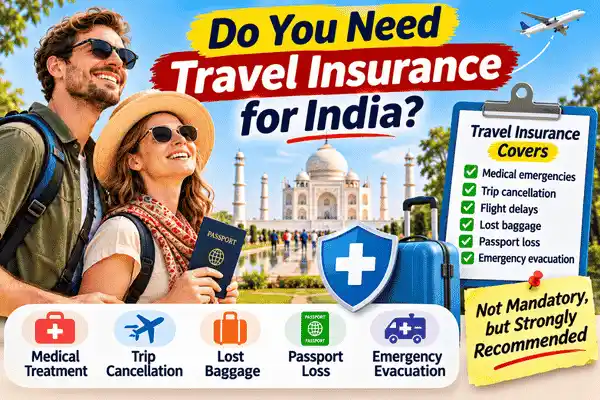
No, travel insurance is not mandatory for most tourists visiting India. However, it is strongly recommended because it can help cover unexpected medical expenses, trip cancellations, lost baggage, passport loss, and emergency evacuation. A good policy can save you from significant costs if something goes wrong during your trip.
Is travel insurance required to enter India?
For most visitors, India does not require proof of travel insurance for entry or for obtaining an e-Visa.
Even though it is not an entry requirement, many government travel advisories recommend having insurance that covers medical treatment and emergency evacuation.
Why should you buy travel insurance for India?
Travel insurance protects you from unexpected situations that could affect your trip.
It can help if you experience:
A medical emergency
Flight cancellation
Flight delay
Lost baggage
Lost passport
Emergency evacuation
Trip interruption
Without insurance, you may have to pay these costs yourself.
What does travel insurance usually cover?
Most comprehensive travel insurance policies include:
Emergency medical treatment
Hospital expenses
Medical evacuation
Trip cancellation
Trip interruption
Flight delays
Lost or delayed baggage
Passport loss
Personal liability
Emergency assistance
Coverage varies by insurer, so always read the policy before purchasing.
What is usually not covered?
Many standard policies exclude:
Pre-existing medical conditions
Adventure sports unless added
Alcohol or drug-related incidents
Travelling against medical advice
Self-infacted injuries
Non-disclosed medical conditions
Always read the exclusions carefully before buying a policy.
How much does travel insurance cost?
The price depends on:
Your age
Trip duration
Country of residence
Coverage amount
Destination
Optional add-ons
For most travelers, travel insurance costs only a small percentage of the total trip cost.
Buying a policy before your departure usually provides the best protection.
Is medical coverage important in India?
Yes.
India has excellent private hospitals in many major cities, but treatment often requires payment or confirmation of insurance before care begins.
Emergency medical coverage and medical evacuation are among the most valuable parts of a travel insurance policy.
Should you buy travel insurance if you are visiting the Golden Triangle?
Yes.
A Golden Triangle Tour involves travel between Delhi, Agra, and Jaipur.
Although millions of tourists complete this route safely every year, travel insurance provides financial protection if your journey is interrupted by illness, flight delays, or lost luggage.
It also gives peace of mind during a multi-city trip.
How do you choose the right travel insurance policy?
Before buying a policy, compare:
Medical coverage limits
Emergency evacuation cover
Trip cancellation benefits
Baggage protection
Passport loss cover
24-hour emergency assistance
Policy exclusions
Do not choose a policy based only on price.
A slightly higher premium may provide much better protection.
When should you buy travel insurance?
Purchase your policy as soon as you book your flights or tour.
Buying early may provide protection if you need to cancel your trip before departure for a covered reason.
What mistakes should travelers avoid?
Avoid these common mistakes:
Buying the cheapest policy without reading the coverage.
Ignoring exclusions.
Not declaring pre-existing medical conditions.
Forgetting to check medical evacuation coverage.
Waiting until the last minute to buy insurance.
Assuming your regular health insurance works internationally.
Expert tips
Buy insurance before booking non-refundable activities.
Save a digital copy of your policy.
Keep the emergency assistance number on your phone.
Check whether adventure activities require additional cover.
Confirm the claim process before traveling.
Carry copies of important travel documents.
Which related guides can help you plan?
You may also find these articles useful:
FAQs
Is travel insurance mandatory for India?
No. Travel insurance is not mandatory for most tourists visiting India, but it is strongly recommended because it helps cover unexpected medical and travel-related expenses.
Does travel insurance cover medical emergencies?
Most comprehensive policies include emergency medical treatment, hospitalisation, and emergency medical evacuation. Coverage depends on the insurer and policy you choose.
Will travel insurance cover lost baggage?
Many policies include compensation for lost, stolen, or delayed checked baggage, subject to policy limits and conditions.
Does travel insurance cover passport loss?
Yes. Many travel insurance policies provide assistance and financial cover if your passport is lost or stolen during your trip.
Should I buy travel insurance for a short trip?
Yes. Even a short holiday can be affected by illness, flight delays, or lost baggage. Insurance helps reduce unexpected expenses.
Does my health insurance work in India?
Many domestic health insurance plans do not provide international medical coverage. Check with your insurer before you travel.
Does travel insurance cover adventure activities?
Not always. Activities such as trekking or scuba diving may require additional coverage. Check your policy before participating.
When should I buy travel insurance?
Buy your policy as soon as your trip is confirmed so you can receive eligible cancellation benefits before departure.
Can I travel to India without insurance?
Yes. Most travelers can enter India without travel insurance, but traveling without coverage means you may have to pay unexpected medical or travel costs yourself.
Is travel insurance worth the cost?
For most international travelers, yes. The cost of insurance is usually small compared with the potential cost of medical treatment, emergency evacuation, or trip disruption.
Conclusion
Travel insurance is not a legal requirement for visiting India, but it is one of the smartest purchases you can make before your trip. A comprehensive policy can protect you from unexpected medical bills, travel disruptions, and lost belongings. Before you buy, compare coverage, understand the exclusions, and choose a policy that matches your itinerary and planned activities.